
PCI DSS & HIPAA Secure & Standards Compliant
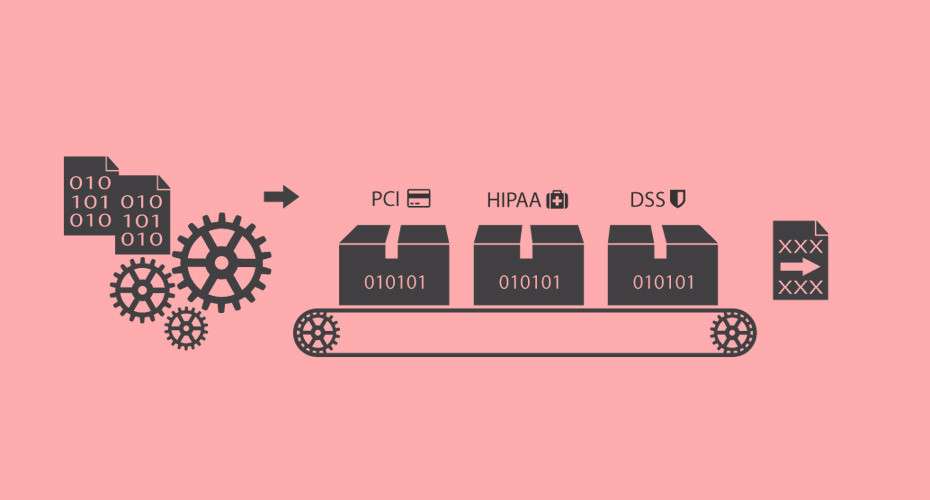
The WholesaleBackup Online Backup Client also is unique in facilitating regulatory compliance for such strict standards such as PCI DSS and HIPAA, and because it can handle backup sets with millions of files, you can sell to a larger audience and increase your profits.
Secure Standard Compliant Backup
When your backup service is PCI, HIPAA and secure standard compliant this provides you a much wider market for backup services (i.e. you can target health-care and credit card processors and merchants) Lower liability exposure
Designed from the ground up with AES-256 encryption for *all* file operations on the client and the server. Legacy and commodity solutions have unencrypted caching and temporary files, so they fail PCI DSS audits!
The Only Solution for PCI DSS-Compliant Online Backup
All of the WholesaleBackup backup software has been designed for demanding online backup deployments including environments subject to complex regulatory compliance such as:
- Financial services: NASD 3010 and 3110, SEC 17a-3 & 17a-4, GLBA
- Health care: HIPAA, Public Law 104-191
- Publicly traded companies: Sarbanes-Oxley 802(a)(1) & 802(a)(2), NASD 3510, 3520
- All companies: PCI DSS (credit-card protection)
- Our software will run on all supported versions of Microsoft Windows (i.e. XP, Vista, 7, 8, 2003, 2008, 2012), both 32-bit and 64-bit on Intel or AMD.
WholesaleBackup’s Online Backup Service for Microsoft Windows (WholesaleBackupDPS) does not involve the use or disclosure of PHI (public health information), and any access to PHI by WholesaleBackup would be incidental, if even possible given that all data transmitted to and stored by WholesaleBackup is encrypted, and therefore WholesaleBackup is not a Business Associate.
The only title of HIPAA that has bearing on WholesaleBackupDPS is the Administrative Simplification in Title 2. WholesaleBackupDPS clearly falls within the requirements of the HIPAA Administrative Simplification Security Rule. WholesaleBackup’s online backup software for Microsoft Windows as well as the subscription Service it uses are compliant today, and can provide a foundation for overall compliance.
The Security Rule specifies the means which should be used to protect PHI. It requires that Covered Entities have appropriate Administrative Procedures, Physical Safeguards, and Technical Safeguards to protect access to PHI.
Examples of appropriate safeguards include the establishment of Clear Access Control policies, procedures, and technology to restrict who has authorized access to PHI.
Restricted and locked areas where PHI is stored. Appropriate Data Backup, Disaster Recovery, and Emergency Mode Operation planning. Technical security mechanisms such as encryption to protect data that is transmitted via a network.
With WholesaleBackupDPS all information to be backed up is encrypted by the local client computer before being transmitted, using a key that is stored locally. Data is stored on WholesaleBackup’s servers in its encrypted form. Data can only be recovered by transmitting it back to the local client, which decrypts it, again using the locally-stored key. The most important feature of this arrangement is that while the data is stored on WholesaleBackup’s servers, it is encrypted and not in a readable format. The remote server does not have access to the key, and without the key, the data cannot be converted to a readable format.
WholesaleBackup’s client software contains all appropriate technical security mechanisms to protect the data that is transmitted to and from WholesaleBackup’s servers and is therefore compliant with the Final Security Rule.
WholesaleBackupDPS can form a critical part of Data Backup, Disaster Recovery, and Emergency Mode Operations strategies by providing offsite backup that is in a different location from the Covered Entity’s site to minimize the likelihood of data loss in a disaster.
WholesaleBackupDPS, as part of a comprehensive security plan, can be an important part of complying with the HIPAA Administrative Simplification Security Rule.


